
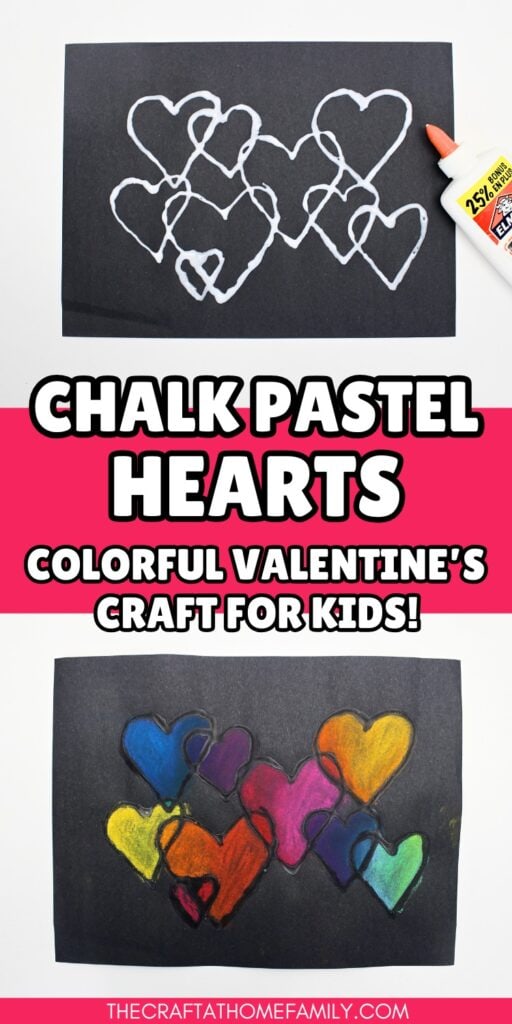
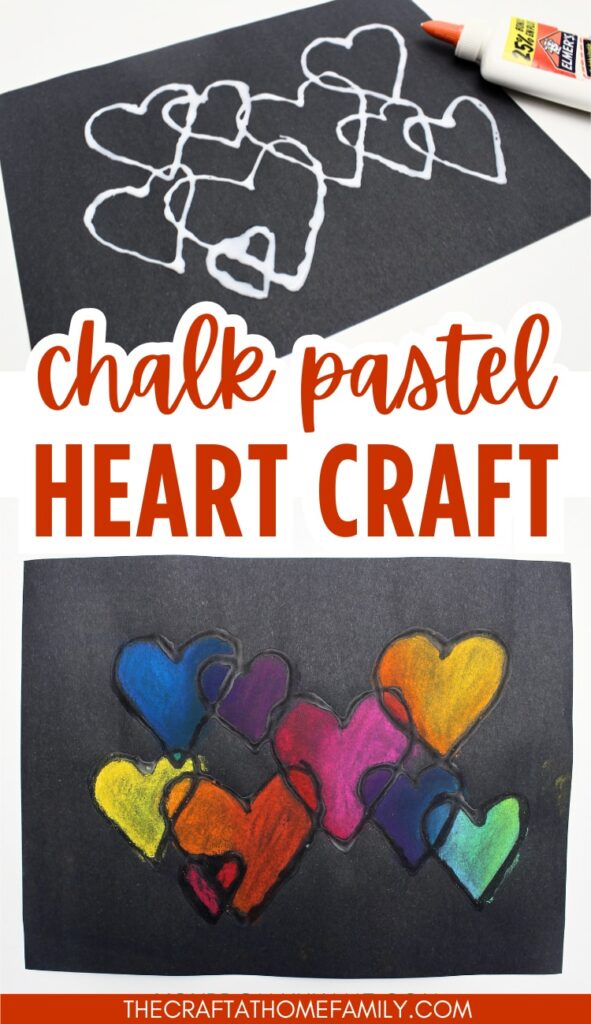
Love colorful crafts? These glue and chalk pastel hearts are gorgeous, fun to make, and they only require a few simple supplies. Your kids will love this easy Valentine’s Day craft!

JUMP TO…
Valentine’s Day is coming up, and this colorful craft is the perfect way to celebrate with your kids! These gorgeous chalk pastel hearts only require a few simple supplies, and kids of all ages should have lots of fun making them.
Chalk pastels are one of my favorite craft supplies, because they are fun to work with and their colors are super vibrant. If you love them as much as I do, make sure to let me know in the comments!
Why You’ll Love This Craft
- Simple supplies: This craft only requires three things—cardstock, glue and chalk pastels. You may already have all the supplies you need at home.
- Colorful: I love how the black background really makes the colors pop! Any combination of colors can work for this craft, so feel free to grab all your child’s favorites and get creative.
- Easy to make: This project only requires a few simple steps, and tracing the hearts with glue is an excellent way to work those fine motor skills. (I’ve also included tips on making this craft with younger kids, so that everyone can join in on the fun!)
Looking for easy Valentine’s Day activity ideas? Check out these Fizzy Baking Soda Hearts, this Floating Hearts Experiment, this Valentine’s Day Magic Paper Towel Art or this Rose Petal Play Dough!

GRAB OUR FREE 30-PAGE ACTIVITY BUNDLE!
By submitting your email address, you are agreeing to the terms of our Privacy Policy. You can unsubscribe at any time.
Required Materials

- Cardstock: I recommend black cardstock because it will really allow the colors to pop. The one I used was US Letter format (8.5 x 11 inches), but any size will do. If you don’t have cardstock, black construction paper is also an option, but it is less sturdy and tends to get a bit wavy after the glue is added.
- Glue: You’ll need a bottle of liquid white school glue with precision tip (not the large bulk bottles).
- Chalk pastels: I love this Sargent Art chalk pastel set with 48 colors. Whichever set you choose, make sure they are soft chalk pastels rather than hard or oil pastels. Any combination of colors can work—for best results, use two to three shades of each color to create a gradient.
The full supply list and instructions can be found in the how-to card.
How to Make Glue & Chalk Pastel Hearts (Step-by-Step)
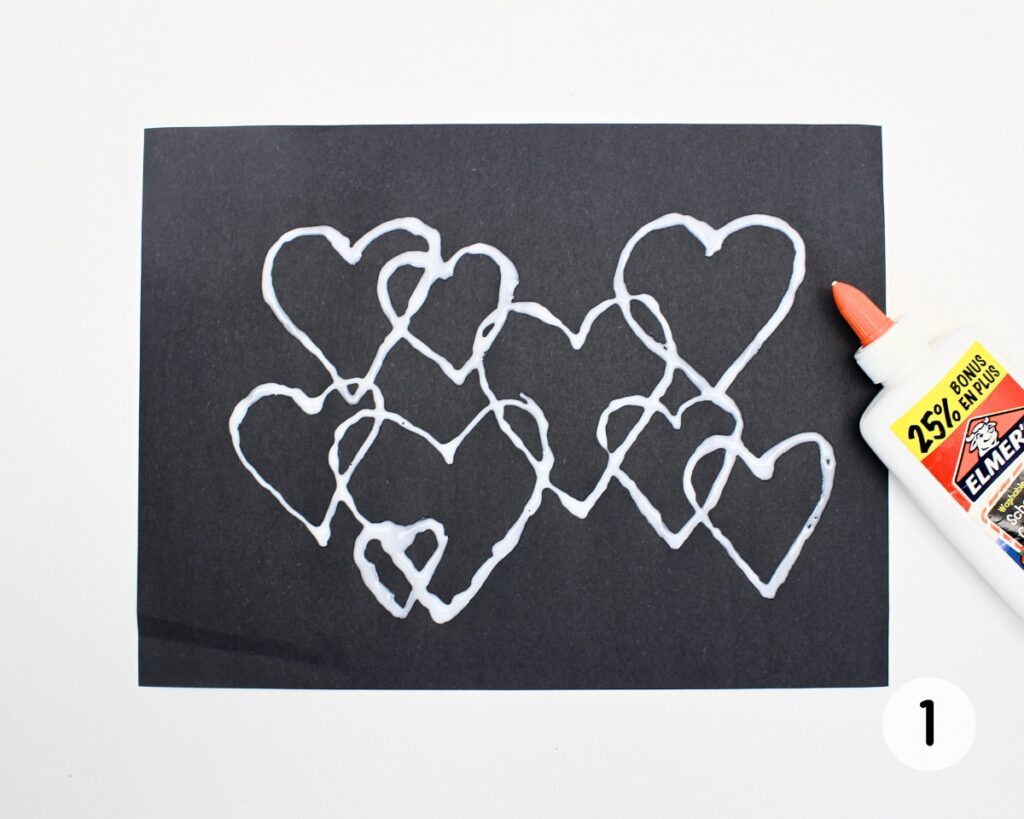
Step 1: Trace hearts with glue. Use a bottle of liquid glue with a precision tip to draw several overlapping hearts on the sheet of cardstock. (The size and number of hearts is up to you.)
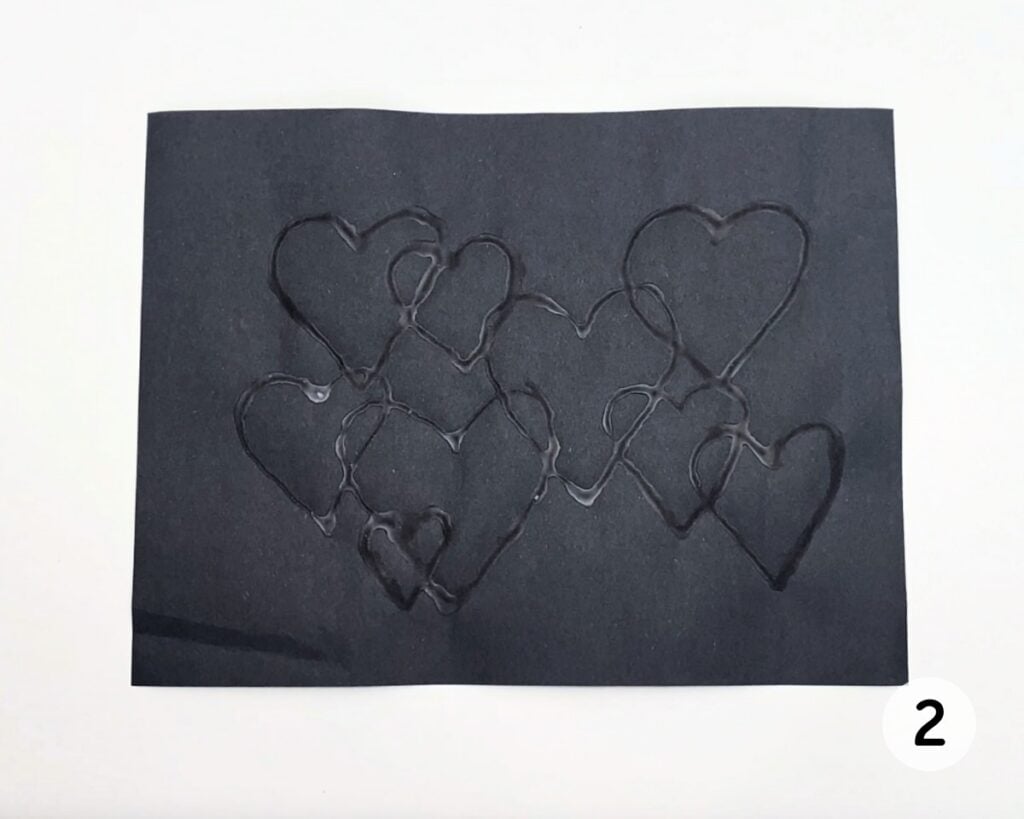
Step 2: Let glue dry. Let the sheet of cardstock sit undisturbed several hours, until the glue has dried and looks completely transparent, with no trace of white remaining.
Making This Craft with Younger Kids?
If you have a younger child at home who wants to participate, help them out by tracing the hearts for them and letting them add the chalk pastel once the glue is dry.
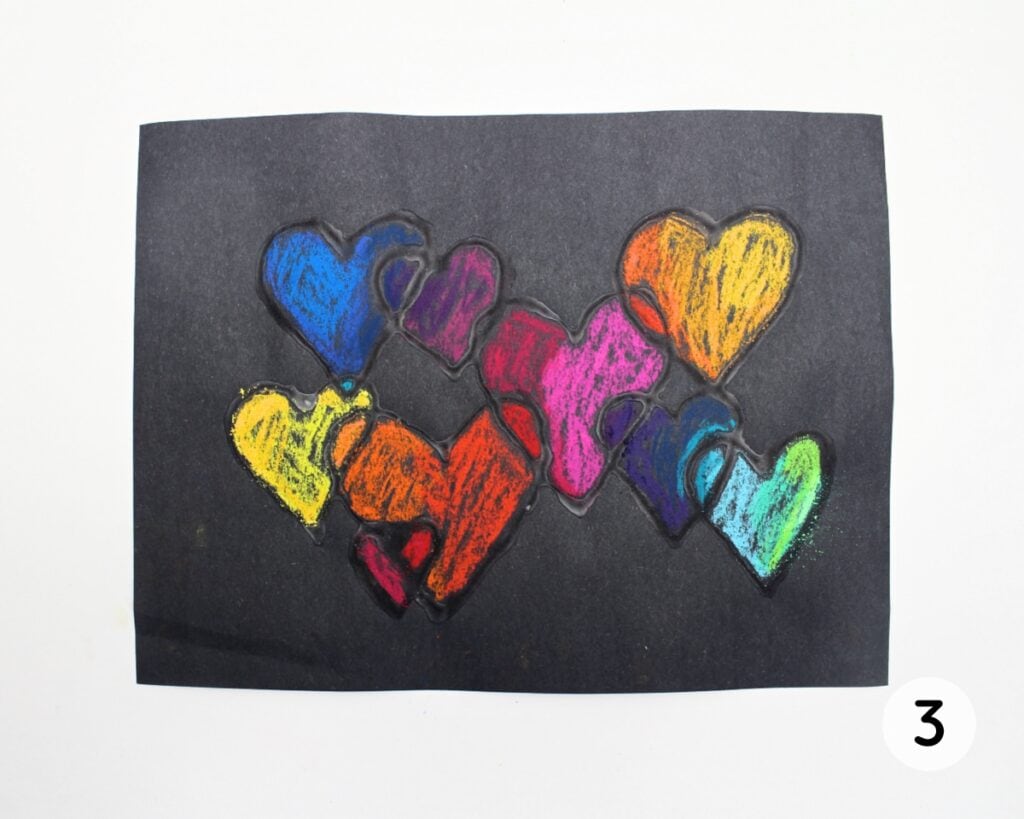
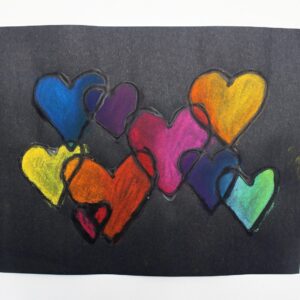
Step 3: Add chalk pastel. Use chalk pastel to color in the hearts, allowing the glue to form a “wall” that separates the different colors into sections. For extra depth, create a gradient by using two or three similar colors inside each heart.
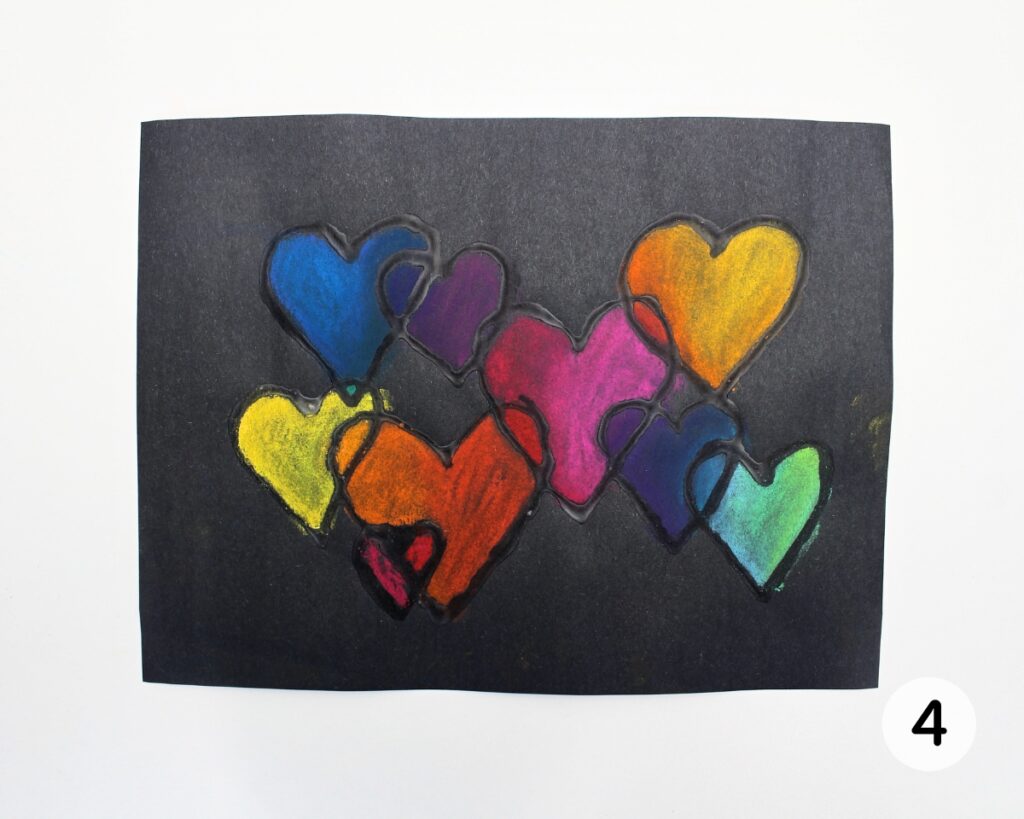
Step 4: Smudge chalk pastel. Use a tissue or your fingers to spread the pigment of the chalk pastel in between the lines of glue, washing your hands in between each section to prevent any unintentional color mixing.
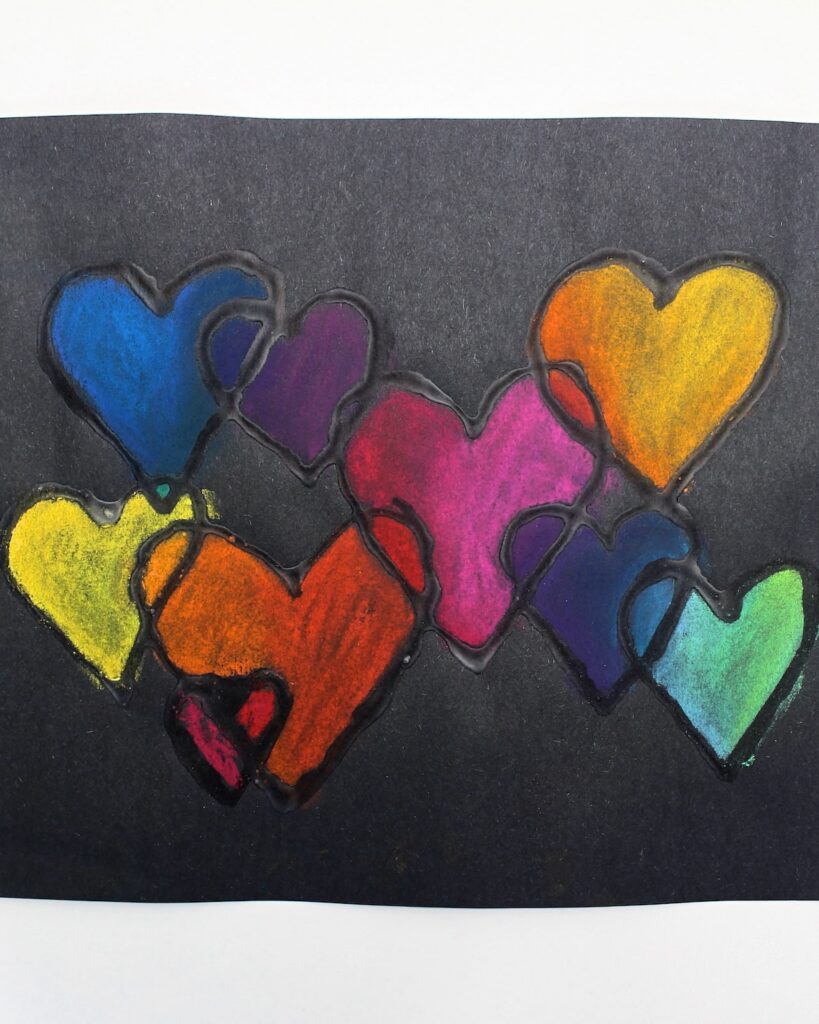
Look how gorgeous those hearts turned out! This was such a fun craft to make, and my kids loved having the ability to use a whole rainbow of colors.
Helpful Tips
- Use color gradients: For best results, try using two or three shades of the same color inside each heart and gently blending them with your fingers to create a color gradient.
- Create a rainbow: You should be able to include lots of different colors provided you draw enough hearts. I used the sections where two hearts overlapped to create a smooth transition from one color to the next.
- Avoid unintended color mixing: To prevent your craft from looking messy, avoid mixing colors that you don’t intend to mix by washing the previous color off your fingers before switching to the next. (You don’t need to wash your hands while creating a gradient, as those colors are intended to be mixed.)
- Keep the mess contained: Steps 3 and 4 (using and blending the chalk pastels) can get a little messy. To limit the mess, protect your work surface with parchment paper, keep a tissue on hand to wipe up unexpected smudges, and wash your hands frequently to remove excess residue from the chalk pastels.
More Valentine Crafts for Kids
If you have tried these Glue & Chalk Pastel Hearts or any other project on my website, please let me know how it went in the comments below. I can’t wait to hear from you!
Glue & Chalk Pastel Hearts
Materials
- 1 sheet black cardstock
- 1 bottle liquid white school glue with precision tip
- chalk pastels assorted colors
Instructions
- Use a bottle of liquid glue with a precision tip to draw several overlapping hearts on the sheet of cardstock.
- Let the sheet of cardstock sit undisturbed several hours, until the glue has dried and looks completely transparent, with no trace of white remaining.
- Use chalk pastel to color in the hearts, allowing the glue to form a “wall” that separates the different colors into sections. For extra depth, create a gradient by using two or three similar colors inside each heart.
- Use a tissue or your fingers to spread the pigment of the chalk pastel in between the lines of glue, washing your hands in between each section to prevent any unintentional color mixing.
Video
Notes
- Experiment with gradients: Try using two or three shades of the same color within each heart, and gently blending them with your fingers to create a gradient.
- Create a rainbow: Choose a wide variety of colors, and use the sections where the hearts overlap to create a smooth transition from one color to the next.
- Avoid unintended mixing: Avoid mixing colors you don’t intend to mix by washing the previous color off your fingers when you’re switching colors.

Only your name will be made public. Please note that by submitting your comment, you are agreeing to the terms of our Privacy Policy.