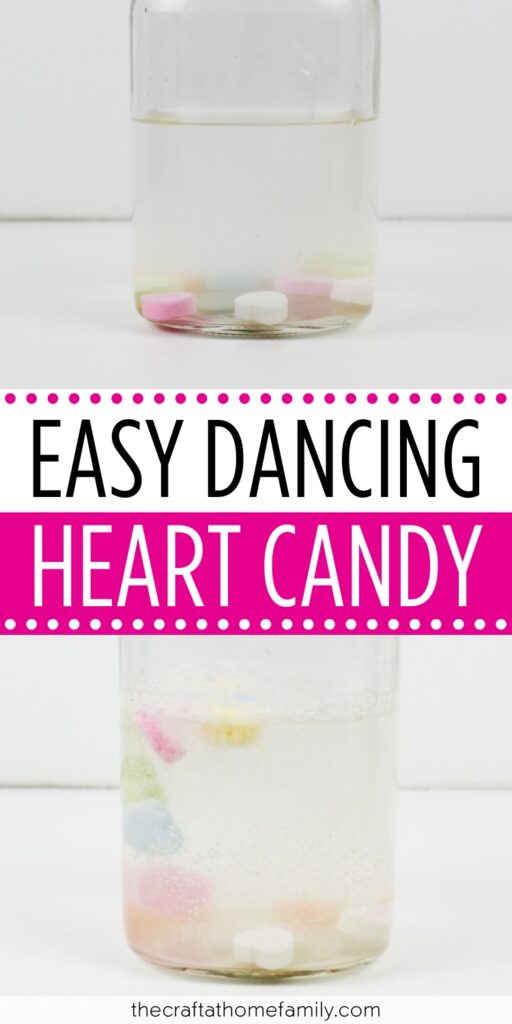
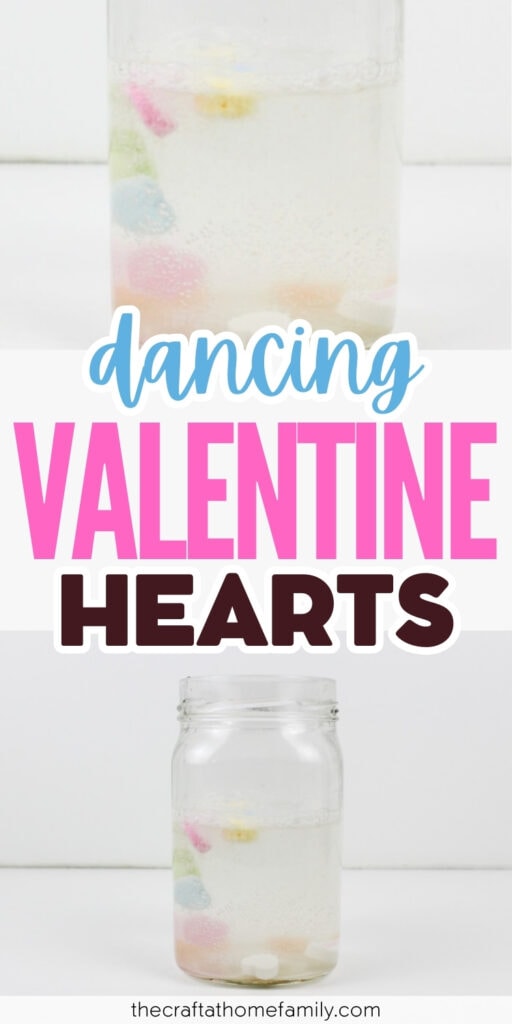
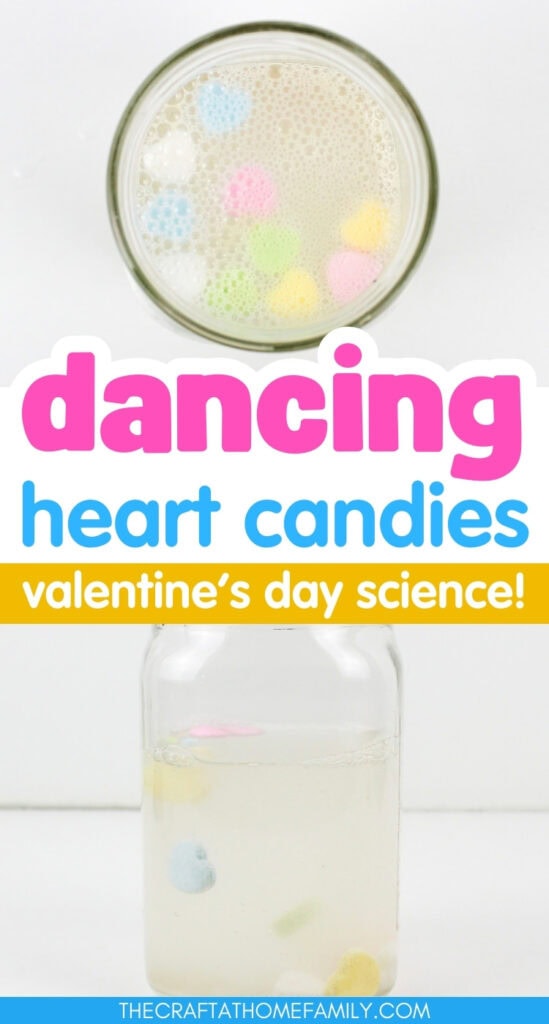
Looking for a fun way to use conversation hearts? This dancing heart experiment is super easy to set up, and only requires a few simple supplies. Your child will love seeing the heart candies dance inside the jar!
JUMP TO…
Love science? This easy Valentine’s Day science experiment is perfect for both younger and older kids, and it only requires a few simple supplies—most of which you probably already have at home.
This simple STEM project is perfect for science-loving kiddos, or for any child who is filled with curiosity (which is almost all of them). Such a fun way to repurpose Valentine’s Day candy and use up any extra you may have lying around!
Why You’ll Love This Activity
- Simple supplies: This experiment only requires a few basic supplies like water, baking soda and vinegar, most of which you probably already have in your pantry.
- Easy to do: Even younger kids should be able to complete all of the steps with little to no help from an adult!
- Great for little scientists: We’ve included a breakdown of the science behind this experiment, as well as some additional ways for your child to keep exploring, so make sure to read all the way to the bottom if you want to make the most out of this STEM activity.
- Not age specific: This experiment is perfect for kids of all ages, including toddlers, preschoolers and elementary school students. You can even do it in the classroom!
Looking for more Valentine’s Day science experiments? Check out this Valentine’s Day Skittles Experiment, this Floating Heart Experiment or this Valentine’s Day Magic Paper Towel Experiment!
GRAB OUR FREE 30-PAGE ACTIVITY BUNDLE!
By submitting your email address, you are agreeing to the terms of our Privacy Policy. You can unsubscribe at any time.
Required Materials
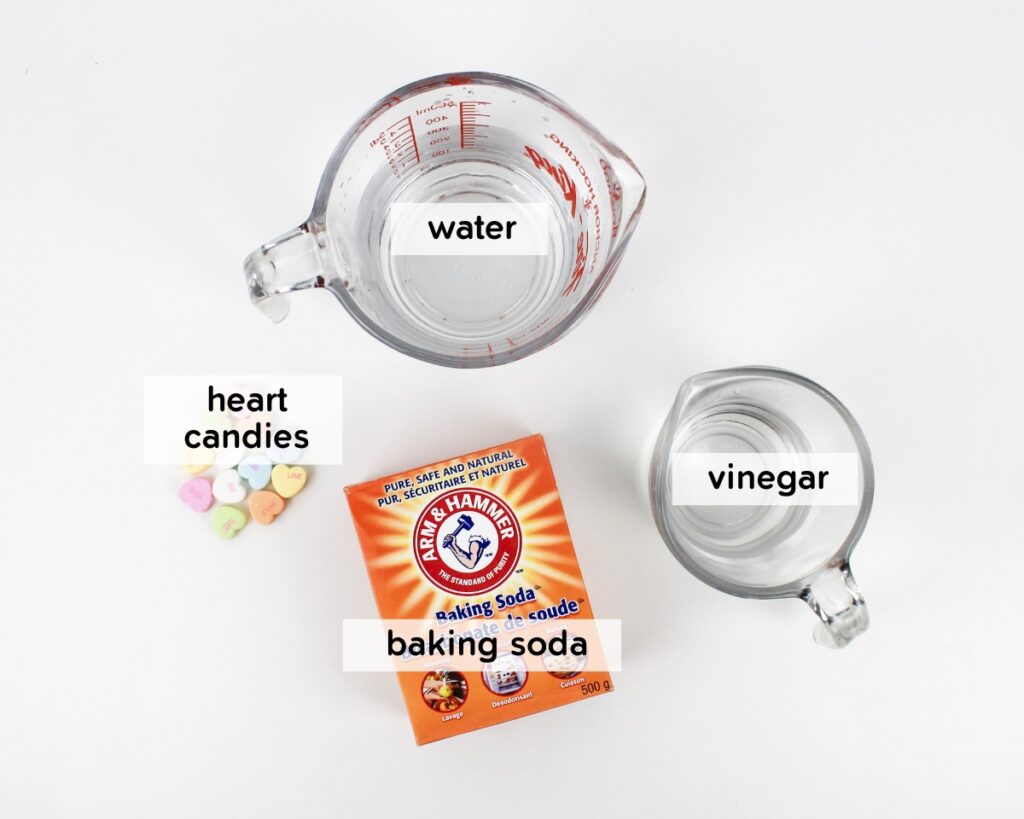
- Water: Tap water is fine for this. Just make sure it’s as clear as possible so that you can get a better view of the dancing hearts!
- Baking soda: You don’t need a lot for this—any open box you have in your fridge or pantry will do. Make sure to keep a little extra on hand in case you want to repeat the experiment!
- Heart candies: We used conversation hearts because they were heavy enough to sink to the bottom of the water, and they didn’t immediately start leaching color into the water and turning it cloudy. You should be able to use another type of candy, like jelly beans, if it fits those same criteria.
- Vinegar: White vinegar is best for this because it is inexpensive and clear in color.
- Glass or jar: Make sure it’s as transparent as possible so that you can see what’s happening inside. I used a 750 ml glass mason jar (about 24 oz, which you may know as a “pint and a half” jar).
The full supply list and instructions can be found in the how-to card.
GRAB OUR FREE 30-PAGE ACTIVITY BUNDLE!
By submitting your email address, you are agreeing to the terms of our Privacy Policy. You can unsubscribe at any time.
How to Make Dancing Conversation Hearts (Step-by-Step)
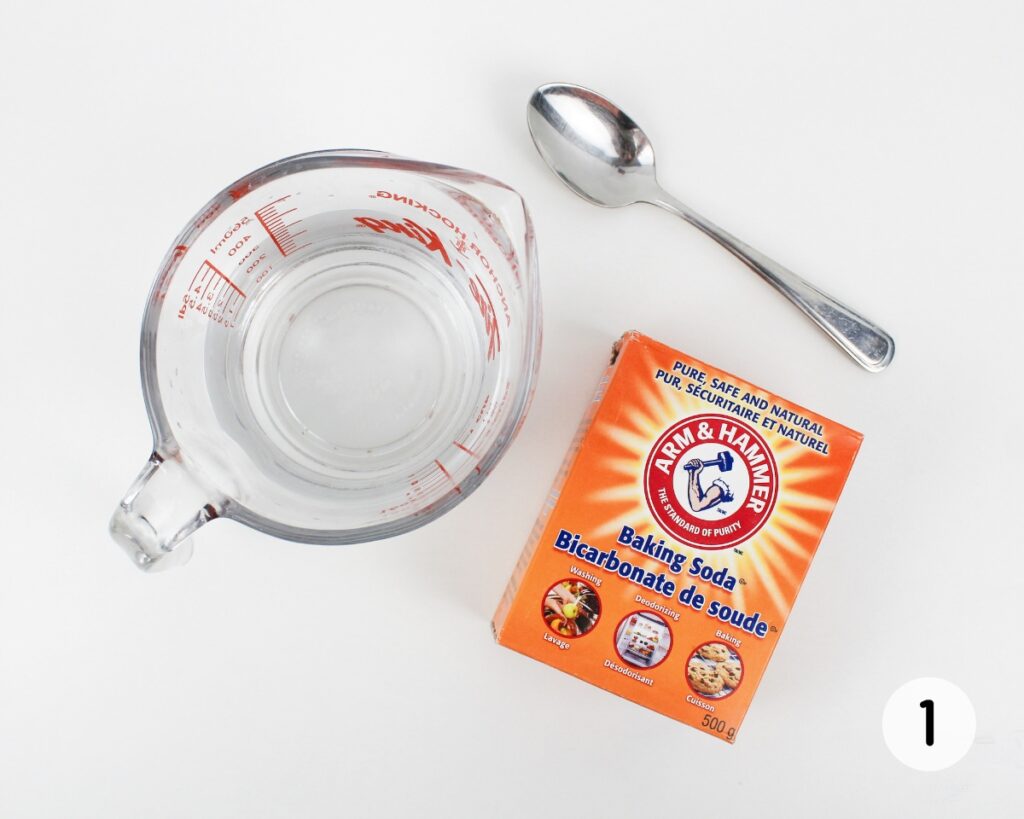
Step 1: Add baking soda to water. Add the baking soda to the water, and stir with a spoon until it has completely dissolved.
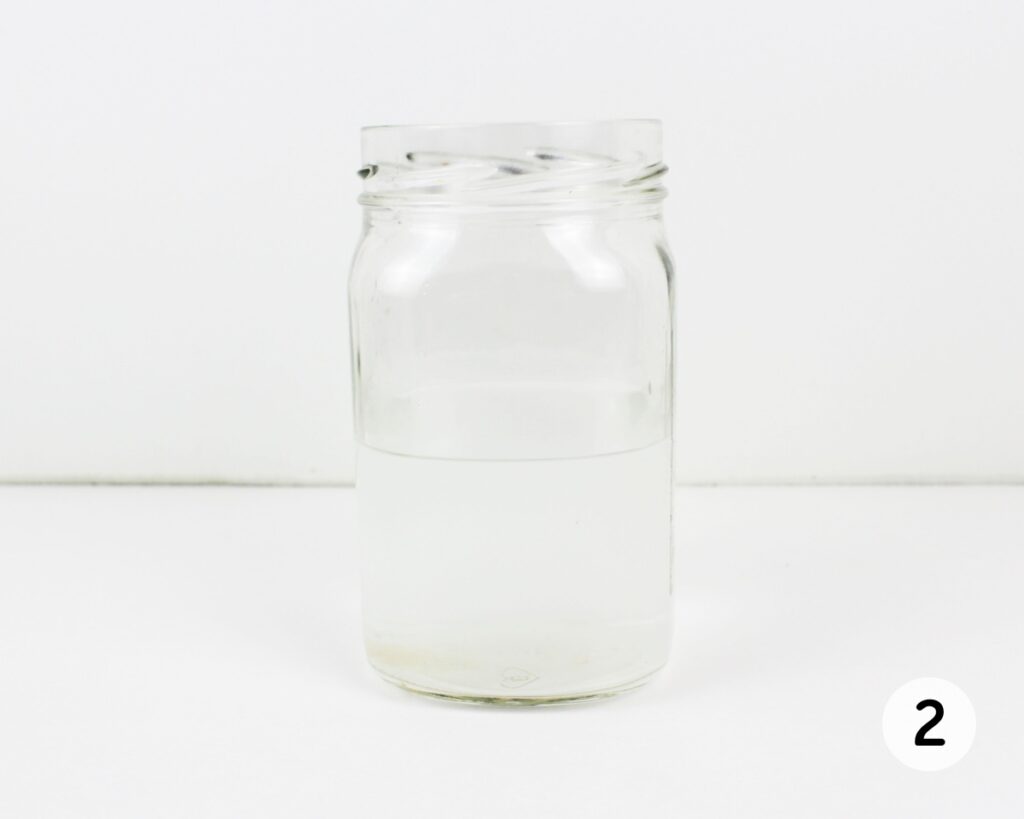
Step 2: Pour water into jar. Pour the water and baking soda mixture into a clear jar or drinking glass.
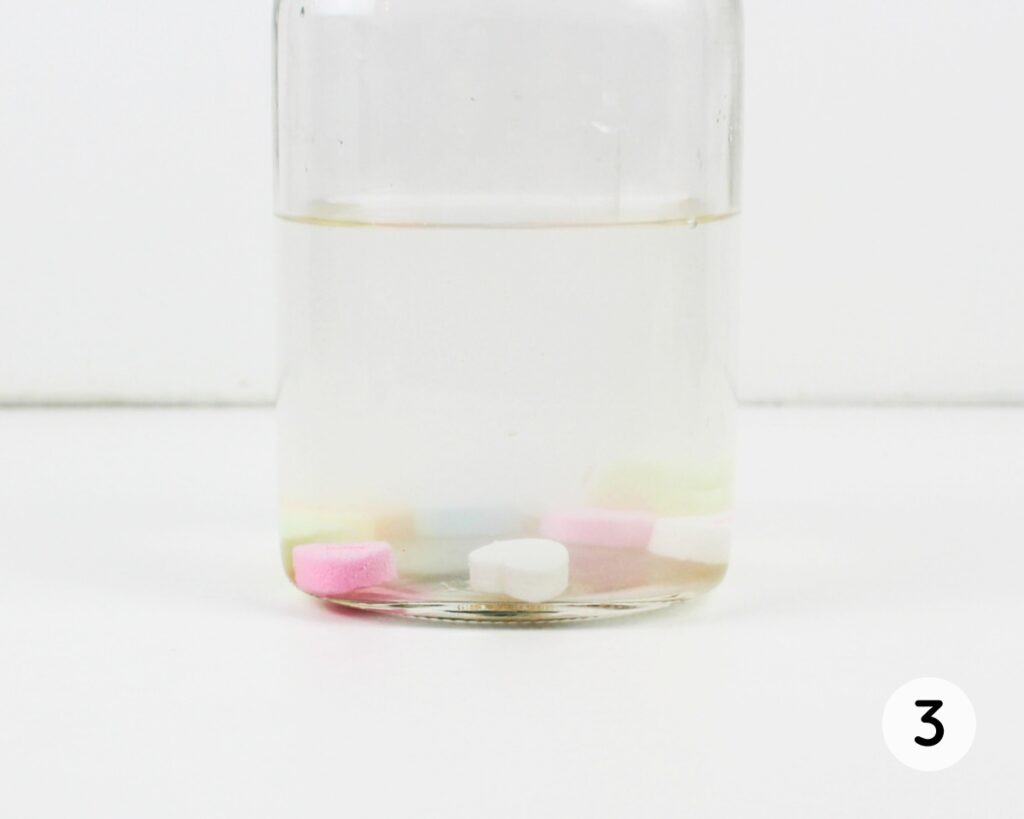
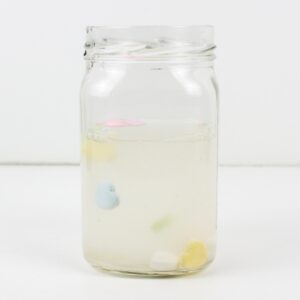
Step 3: Add heart candies. Drop a handful of conversation heart candies into the jar of water. Observe whether they sink or float. (They will sink.)
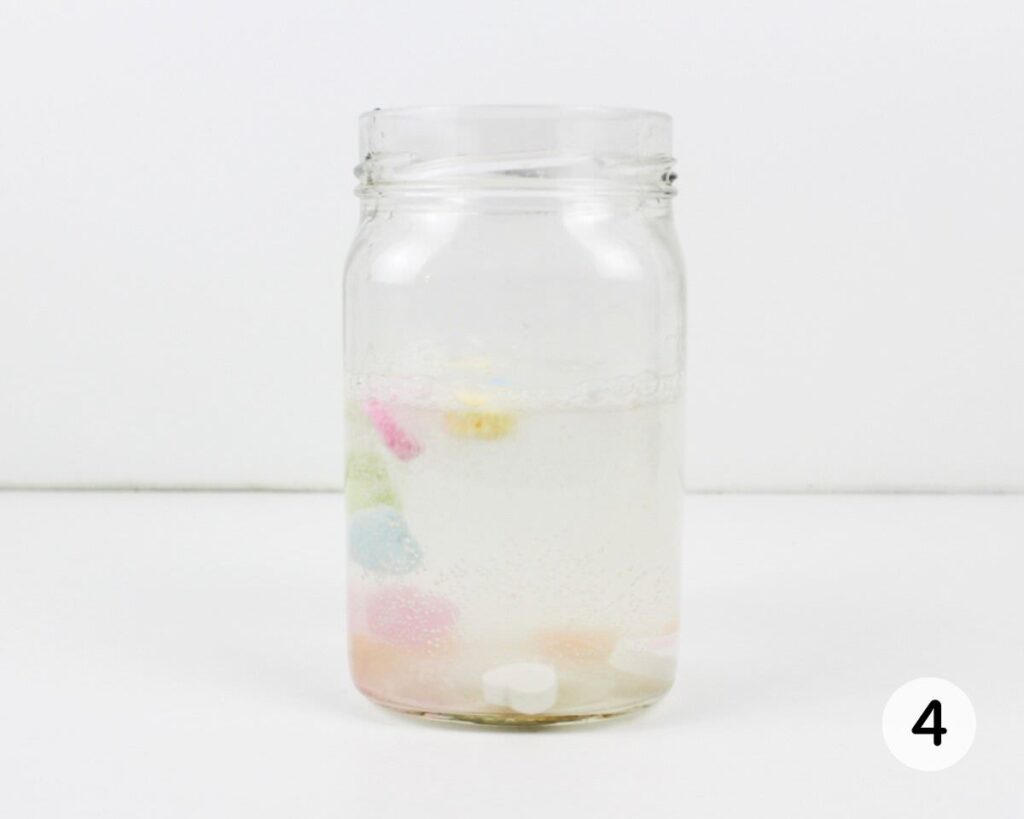
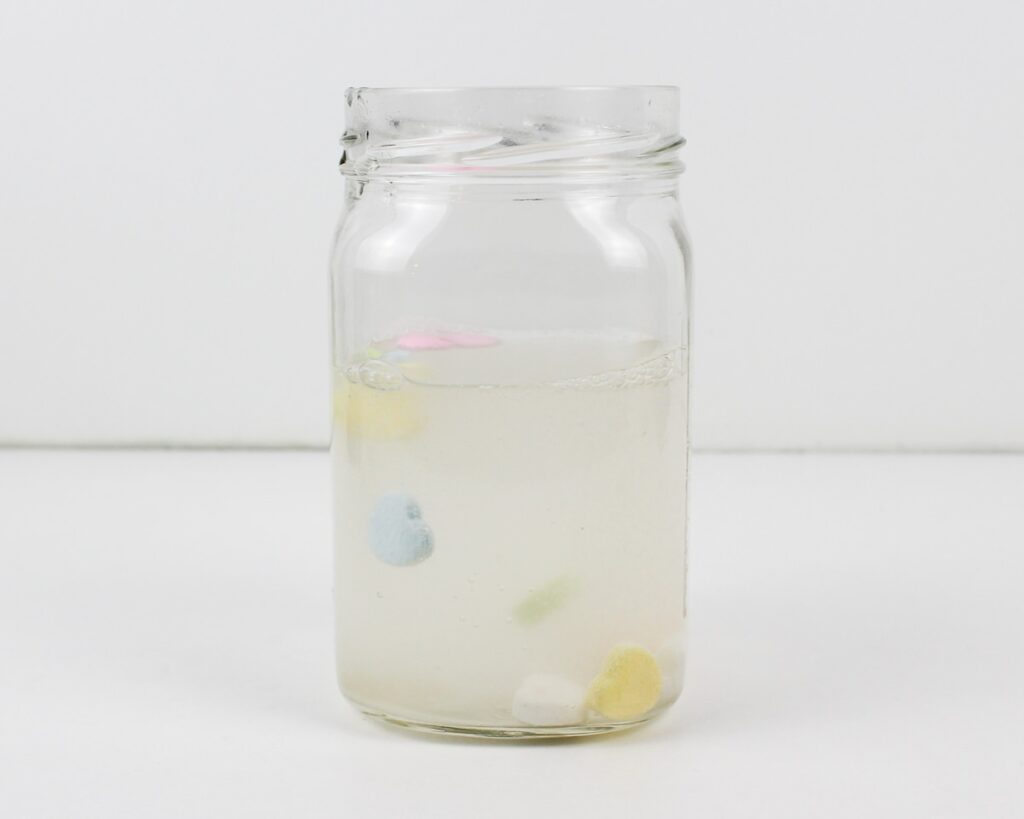
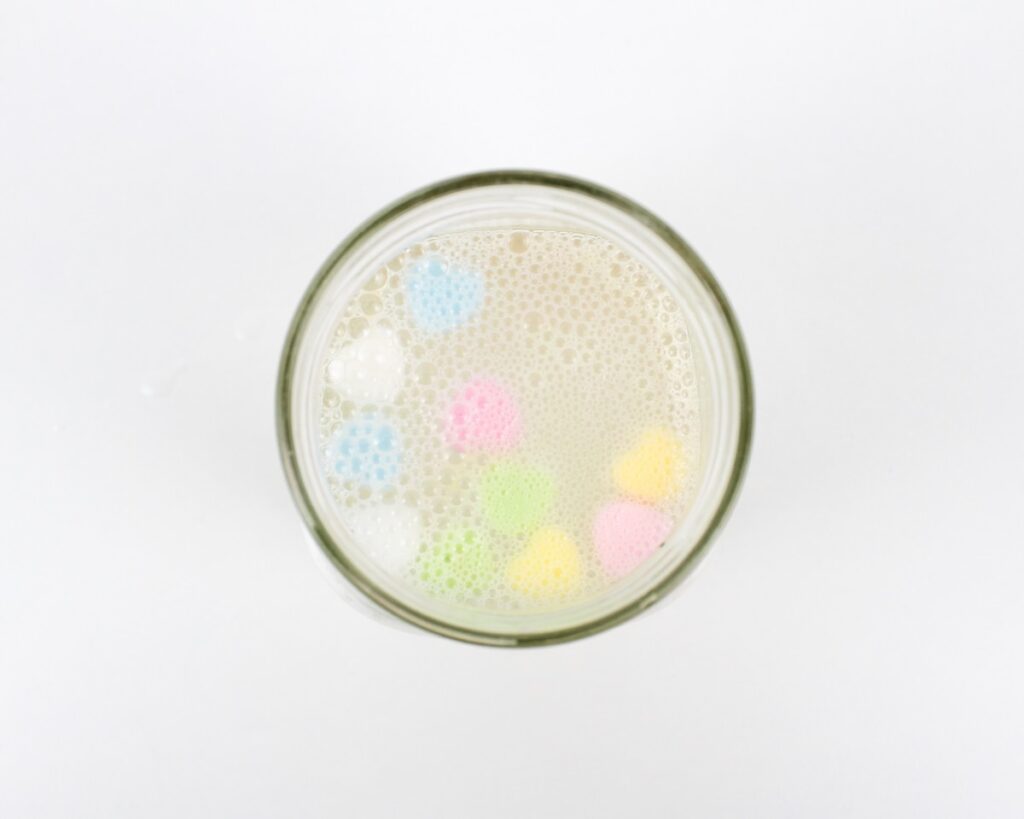
Step 4: Add vinegar. Slowly pour some vinegar into the jar and watch as the hearts start moving upward and floating to the top! If the candy doesn’t float up, give the jar a gentle stir to get it unstuck. The conversation hearts will stay suspended for as long as the bubbles remain, occasionally falling and rising back up, but will eventually sink to the bottom once all the bubbles have dissipated.
This experiment was super simple to set up, and it was a fun way to use up the conversation heart candies we picked up at the bulk food store! Feel free to repeat the experiment as many times as you like by dumping out the cloudy water and starting over with clean water.
Helpful Tips
- Keep a clear view: To get as clear a view as possible of what is happening inside the jar, make sure to use clear water, to stir until the baking soda is fully dissolved, and not to wait long before adding the vinegar, as the candy will eventually tint the water and make it cloudy.
- Shake the jar: Are some of the candies stuck to the bottom? If so, give the jar a gentle shake to help the bubbles get underneath the candy and lift it up.
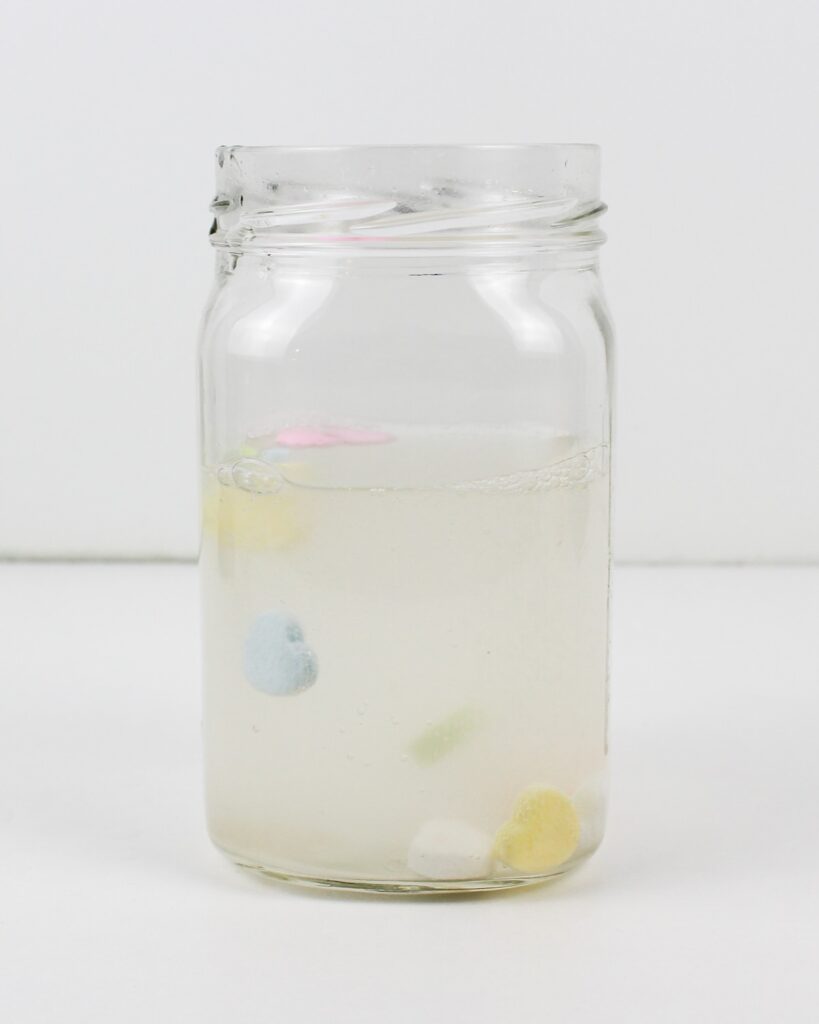
- Wait for the bubbles to pop: The conversation hearts will initially rise to the top, but as the bubbles that are lifting them up start to dissipate, they will eventually fall back down. Wait it out with your kids and discuss your observations, and why the things you’re observing might be occurring. (We’ve included an explanation of the science below!)
- Add more vinegar: After the bubbles pop, adding more vinegar will cause the reaction the occur again. But eventually, once all the baking soda has reacted with the vinegar, it will stop. Experiment with your child to find out how much vinegar this requires!
Ways to Extend This Experiment
Want to take this experiment further? Here are some ways you can keep your scientific exploration going for longer:
- Play around with the ratio of baking soda and water to see if the quantity of bubbles changes, if the amount of vinegar needed to cause the reaction to stop changes, or if the heart candies float for a shorter or longer amount of time. (You’ll also notice that if you add too much baking soda, the water gets cloudy and the reaction is more difficult to see.)
- Instead of using baking soda and vinegar, try simply filling the jar with clear soda to test whether there is enough carbon dioxide inside the soda to make the hearts dance. If there is, try again with another type of soda to see if there is a difference in the way the reaction occurs.
- Try using different types of candy, like jelly beans, to see whether the reaction changes, or whether they float for a different amount of time. (Just watch out for candy that quickly starts leaching color into the water, as this will make the reaction more difficult to see—though this could be fun to experiment with as well!)
- Try stirring the heart candies and pushing them down with a spoon to see whether they keep floating, and whether that helps the bubbles pop faster. (We found that they floated for quite a while.)
- Use a different container, for instance one that is wider or narrower than the one you started with. Does the depth of the water change the way the heart candies dance around, and if so, which container works best for this activity?
- Give an evergreen twist to this Valentine’s Day science experiment by replacing the conversation hearts with raisins, corn kernels or other small items. Have fun testing different items to see what works!
Frequently Asked Questions
Have a question that wasn’t answered here? Let me know in the comments and I’ll be happy to help!
More Valentine Activities for Kids
If you have tried this Dancing Heart Experiment or any other project on my website, please let me know how it went in the comments below. I can’t wait to hear from you!
Dancing Heart Experiment
Materials
- 1 ½ cups water
- 1 tbsp baking soda
- 1 handful conversation heart candies or another type of candy
- ½ cup white vinegar
- 1 clear jar or glass 24 oz or similar
Instructions
- Add the baking soda to the water, and stir with a spoon until it has completely dissolved. Pour the water and baking soda mixture into a clear jar or drinking glass.
- Drop a handful of conversation heart candies into the jar of water and observe whether they sink or float.
- Slowly pour some vinegar into the jar and watch as the hearts start moving upward and floating to the top of the jar! If the candy doesn’t float up, give the jar a gentle stir to get them unstuck. The conversation hearts will stay suspended for as long as the bubbles remain, occasionally falling and rising back up, but will eventually sink to the bottom once all the bubbles have dissipated.

Only your name will be made public. Please note that by submitting your comment, you are agreeing to the terms of our Privacy Policy.