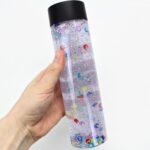
Slow Falling Bead Sensory Bottle
Does your child love sensory bottles? This slow motion sensory bottle is a fun twist on traditional glitter jars!
Servings: 1 bottle
Ingredients
- 1 clear plastic bottle recycled or new
- clear hand soap as needed
- clear dish soap as needed
- 1 handful small plastic beads
- chunky glitter optional
- hot glue or super glue optional
Instructions
- Fill the bottle two thirds of the way with hand soap.
- Add the plastic beads. If you have chosen to use glitter, add a small amount of it. (A little goes a long way.)
- Fill the rest of the bottle with dish soap.
- Seal the bottle and turn it upside down to watch the beads fall. If they fall too quickly, dump out some of the contents of the bottle and add more hand soap; if they fall too slowly, add more dish soap.
- Seal the bottle with a lid. If you want to be sure it won’t open during play, use hot glue or super glue to the inside of the lid.
Video
Notes
1. Remove sticky residue: If you are using a recycled bottle and you’re having trouble removing the sticky residue from the label, use Goo Gone to remove it more easily.
2. Replace the glue periodically: If you have chosen to seal the lid with hot glue or super glue, keep in mind that the glue will weaken over time. Test the seal periodically by giving the lid a gentle twist, and replace the glue if you feel any movement.
3. Replace the beads: The beads can be replaced with other small (ideally plastic) objects like buttons or small LEGO bricks. Avoid items that are prone to rust.
4. Make it seasonal: You can give this project a seasonal twist by replacing the beads with seasonal objects like acrylic hearts or small plastic spiders.
5. Adjust the flow of the liquid:
- Play around with the quantities: Hand soap will make beads stay suspended for longer, while dish soap will make them fall more quickly. Keep dumping out liquid and replacing it until you are happy with the speed at which the beads fall.
- Experiment with different beads: Lighter beads will fall more slowly, while heavier beads will fall more quickly. The size of the beads you use will affect the ratio of hand soap to dish soap.