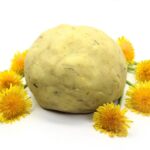
Dandelion Play Dough (Naturally Dyed!)
Do your kids love picking dandelions? Extend the fun by whipping up a batch of dandelion play dough for them to play with!
Servings: 1 large ball
Calories: 1188kcal
Ingredients
- 1 cup yellow dandelion flowers stems removed
- 2 cups all-purpose flour
- ¾ cup salt
- 4 tsp cream of tartar
- 2 cups water
- 2 tbsp oil (vegetable, coconut, etc.)
Instructions
- Use a knife to separate the yellow dandelion petals from the stems, discarding the rest. (It’s fine for a bit of green to be mixed in with the petals.)
- Set aside 2-3 tablespoons of dandelion petals if desired (for aesthetic reasons), then pour the water into a blender and add the remaining petals. Run the blender for 20-30 seconds, until most of the dandelions have been pulverized and the water has turned yellow.
- Combine the flour, salt and cream of tartar in a medium wok or saucepan. If you chose to set aside some of the chopped dandelions during the previous step, stir those into the dry ingredients as well.
- Add the yellow dandelion water and the vegetable oil, and stir until combined.
- Cook on medium heat, stirring constantly, until the mixture becomes a ball of dough that no longer sticks to the sides of the saucepan. (This should take no more than 5 minutes.)
- Set the play dough aside to cool. Once the dough has cooled enough to be handled, knead it with your hands until smooth and elastic.
Video
Notes
1. Making the play dough taste-safe: Bake the flour on a cookie sheet for 5 minutes at 350°F before using it in this recipe.
2. Storage instructions: Place leftover play dough in a sealed zip-top bag with all the air removed, and store it at room temperature. It should last several months if properly stored and not left out for extended periods of time.
3. Making this recipe no-cook: Cooking the play dough on the stovetop will produce softer, longer-lasting play dough, but you can make this recipe no-cook by reducing the quantity of water to 1 cup and boiling it before adding it to the dry ingredients. (You can add a bit more water or flour if needed to achieve the perfect texture.)
4. Helpful tips:
- Use fully bloomed flowers: Pick the dandelions when they are in full bloom and chop them up quickly, before they have a chance to wilt.
- Set aside some petals (optional): To make play dough that has larger bits of dandelion visible, set aside 2-3 tablespoons of dandelion petals to stir into the dry ingredients. This is purely aesthetic—feel free to simply blend them all up with the water instead.
- Don’t overcook the dough: The dough is ready to remove from the heat as soon as it looks dry and stops sticking to the sides of the pan.
- Knead the dough while warm: Knead the dough as soon as it is cool enough to handle, and do not place it in the fridge or freezer to speed up the cooling process.
- Adjust the consistency: If needed, you can add a bit more flour (if the dough is sticky), or a bit more water or oil (if the dough is stiff) to reach the perfect consistency.
Nutrition
Calories: 1188kcal | Carbohydrates: 198g | Protein: 26g | Fat: 30g | Saturated Fat: 2g | Polyunsaturated Fat: 9g | Monounsaturated Fat: 18g | Trans Fat: 0.1g | Sodium: 84915mg | Potassium: 2265mg | Fiber: 7g | Sugar: 1g | Calcium: 105mg | Iron: 13mg